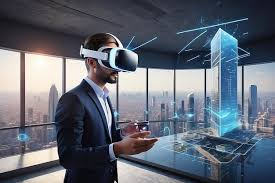
In today’s fast-paced business landscape, the importance of continuous leadership development cannot be overstated. Executives face an array of challenges that require adaptive strategies and advanced management skills. Enter Virtual Reality (VR), a technology platform revolutionizing the way leaders are trained and developed. By immersing executives in realistic simulations, VR offers an innovative approach to skills training that is both effective and engaging. This article explores how VR can be harnessed for dynamic executive training, providing leaders with the tools they need to thrive in an ever-evolving environment.

The Power of Immersive Experience in Leadership Development
Traditional training programs often rely on static content and hypothetical scenarios. In contrast, VR creates an immersive experience that places executives in lifelike situations where they must navigate complex challenges and make critical decisions. This hands-on approach allows for a deeper understanding of leadership dynamics and enhances the retention of learned skills. VR leadership simulations can replicate high-pressure environments, enabling executives to practice their responses in a safe, controlled setting. As a result, leaders can develop their decision-making capabilities and emotional intelligence more effectively than through conventional methods.
Innovative Skills Training through Virtualization
Virtualization in training innovation offers unique advantages that traditional methods cannot match. For example, VR allows for the personalization of training modules to meet specific needs. Executives can engage in scenarios tailored to their industry, role, and personal development goals. This customization ensures that the training is relevant and immediately applicable to their professional challenges. Additionally, the interactive nature of VR training encourages active participation, which is crucial for effective learning. By directly engaging with the material, executives are more likely to internalize the lessons and apply them in real-world situations.
Leveraging VR for Leadership Development
One of the significant benefits of using VR for leadership development is the ability to simulate a wide range of scenarios that are difficult to recreate in traditional settings. For instance, VR can simulate crisis management situations, cross-cultural negotiations, and complex project management tasks. These simulations provide leaders with the opportunity to practice and refine their management skills in a risk-free environment. Furthermore, VR can track and analyze performance data, offering insights into an executive’s strengths and areas for improvement. This feedback loop is invaluable for continuous development and can be used to tailor future training sessions.
The Role of Educational Technology in Executive Training
Educational technology has been a game-changer in the realm of executive training, and VR is at the forefront of this transformation. By integrating VR into training programs, organizations can offer a cutting-edge learning experience that is both effective and scalable. VR platforms can be used to deliver consistent training across multiple locations, ensuring that all executives receive the same high-quality instruction. This consistency is crucial for maintaining standards and ensuring that all leaders are equipped with the necessary skills and knowledge.
Achieving VR Executive Mastery
For executives to truly benefit from VR training, it is essential to focus on achieving VR executive mastery. This involves not only understanding how to navigate VR environments but also leveraging the technology to its fullest potential. Executives should be encouraged to embrace the immersive experience and actively participate in the simulations. By doing so, they can gain a deeper insight into their leadership style and identify areas for growth. Additionally, organizations should provide ongoing support and resources to help executives integrate VR training into their professional development plans.

Implementing VR Leadership Tools
To maximize the benefits of VR in executive training, organizations must carefully select and implement VR leadership tools. These tools should be user-friendly, adaptable, and capable of delivering high-quality simulations. It is also important to ensure that the VR platform is compatible with existing training programs and can be seamlessly integrated into the organization’s overall training strategy. By investing in the right technology, organizations can create a robust training ecosystem that supports continuous leadership development.
Conclusion:
The integration of VR into executive training programs represents a significant leap forward in leadership development. By providing an immersive, interactive, and customizable learning experience, VR can help executives develop the skills and insights needed to lead effectively in a dynamic business environment. As technology continues to evolve, the potential for VR in training innovation will only grow, offering exciting new possibilities for enhancing leadership capabilities. Organizations that embrace this technology will be well-positioned to develop leaders who can adapt, innovate, and lead with confidence.