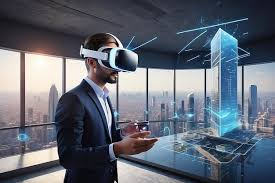
In today’s rapidly evolving business landscape, executives face unprecedented challenges. To stay ahead, leaders must continually hone their skills and adapt to new technologies. One groundbreaking approach that is reshaping executive skill development is the use of Virtual Reality (VR). This immersive technology is transforming traditional training methods, offering unparalleled experiences that push the boundaries of learning and development. In this article, we will explore how VR is revolutionizing executive skill development and highlight the key benefits of this innovative technology platform.

The Power of Virtual Reality in Skills Training
Virtual Reality has moved beyond the realm of gaming and entertainment, finding its place in professional development and educational technology. By creating realistic simulations, VR provides a safe and controlled environment where executives can practice and refine their skills. This approach is particularly effective in leadership training, where real-world scenarios can be replicated without the associated risks.
For instance, VR leadership simulations allow executives to navigate complex situations, make critical decisions, and experience the consequences of their actions in a virtual setting. This type of immersive experience is invaluable for developing key management skills, as it helps leaders to better understand the impact of their decisions and refine their strategic thinking abilities.
Innovative Technology Platform for Leadership Development
The use of VR in executive training is a prime example of training innovation. Traditional methods, such as classroom-based learning and online courses, often fall short in providing the hands-on experience necessary for effective leadership development. In contrast, VR offers a highly engaging and interactive platform that enhances learning retention and application.
One of the major advantages of VR is its ability to provide real-time feedback. During a VR leadership simulation, executives can receive instant insights into their performance, allowing them to identify areas for improvement and make adjustments on the fly. This immediate feedback loop accelerates the learning process and helps to solidify new skills.
Moreover, VR facilitates the virtualization of training programs, making them more accessible and scalable. Companies can deploy VR training modules across multiple locations, ensuring that all executives receive consistent and high-quality training. This scalability is particularly beneficial for large organizations with a global presence, as it eliminates geographical barriers and reduces training costs.
The Role of VR in Directive and Management Skills
Effective leadership requires a blend of directive skills and the ability to inspire and motivate teams. VR leadership tools are designed to develop both aspects, providing comprehensive training that addresses the diverse challenges faced by executives. Through virtual learning, leaders can practice delivering directives in various scenarios, from crisis management to strategic planning sessions.
Additionally, VR executive mastery programs often include modules focused on soft skills, such as communication, empathy, and conflict resolution. These skills are crucial for building strong, cohesive teams and fostering a positive organizational culture. By simulating real-life interactions, VR helps leaders to develop the emotional intelligence needed to navigate complex interpersonal dynamics.
Immersive Experience for Leadership Excellence
The immersive experience provided by VR is a game-changer for leadership development. Unlike traditional training methods, which can be passive and theoretical, VR places executives in the middle of the action. This level of engagement not only makes the training more enjoyable but also more effective.
For example, a VR-based leadership simulation might involve navigating a high-stakes negotiation with a key client or managing a sudden organizational crisis. These scenarios require leaders to think on their feet, make quick decisions, and manage stress—all within a controlled virtual environment. This experiential learning approach ensures that executives are better prepared to handle similar situations in the real world.
Future of Executive Skill Development with VR
As VR technology continues to advance, its applications in executive skill development will only expand. Future innovations may include even more sophisticated simulations, enhanced analytics for performance tracking, and greater integration with other educational technologies. Companies that embrace VR for leadership development will be at the forefront of training innovation, equipping their executives with the skills needed to lead effectively in an increasingly complex world.
In conclusion, Virtual Reality is revolutionizing executive skill development by providing an immersive, interactive, and scalable training platform. By leveraging VR leadership tools and simulations, organizations can enhance their leaders’ capabilities, improve management skills, and foster a culture of continuous learning and development. As we look to the future, VR will undoubtedly play a pivotal role in shaping the next generation of executive leaders.