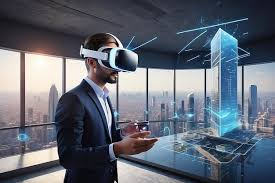
In today’s fast-paced, technology-driven world, the way we approach leadership development is undergoing a significant transformation. Traditional methods of leadership training are giving way to innovative, immersive experiences that leverage cutting-edge technology. Among these advancements, Virtual Reality (VR) stands out as a powerful tool for enhancing leadership skills. This article explores how VR platforms are revolutionizing the leadership journey, providing a unique, immersive experience that unleashes potential and fosters growth.

The Rise of Virtual Reality in Leadership Training
Virtual Reality is no longer just a buzzword in the tech industry; it has become a vital component in various fields, including leadership training. VR platforms offer a range of applications that create realistic scenarios for leaders to practice and hone their skills in a safe and controlled environment. These virtual environments simulate real-world challenges, allowing leaders to experiment with different strategies and see the consequences of their decisions without any real-world repercussions.
Immersive Experience: A New Era in Leadership Development
One of the key advantages of VR in leadership development is the immersive experience it provides. Unlike traditional training methods, which often rely on lectures or role-playing exercises, VR places leaders in the heart of the action. This immersive approach helps in better retention of information and more effective learning. Leaders can navigate complex situations, make decisions in real-time, and receive instant feedback, which is crucial for developing critical management skills.
Transformative Skills Training with VR Platforms
VR platforms are designed to offer comprehensive skills training that goes beyond theoretical knowledge. They provide a hands-on approach to learning, where leaders can engage in leadership simulations that mimic real-life challenges. This practical experience is invaluable in developing competencies such as strategic thinking, problem-solving, and effective communication. VR training tools can be customized to focus on specific skills or scenarios relevant to an organization’s needs, ensuring that the training is both relevant and impactful.
Educational Technology: Bridging the Gap
Educational technology, particularly VR, bridges the gap between knowledge acquisition and practical application. Through VR, leaders can transition from passive learning to active engagement. This shift is crucial in leadership training, as it encourages leaders to apply what they have learned in realistic settings. VR platforms offer a variety of interactive modules that cater to different learning styles, making leadership development more accessible and effective for everyone.
Leadership Tools for the Modern Executive
Modern leadership demands a set of tools that can adapt to the ever-changing business landscape. VR platforms provide these tools, equipping leaders with the skills necessary to navigate complex and dynamic environments. These tools include virtual learning modules that cover a wide range of topics, from conflict resolution to strategic planning. By utilizing VR technology, leaders can stay ahead of the curve and continuously improve their abilities.
VR Executive Mastery: A Competitive Edge
Achieving executive mastery requires continuous learning and adaptation. VR platforms offer a competitive edge by providing a continuous, immersive learning experience that traditional methods cannot match. Leaders can revisit scenarios, practice different approaches, and refine their skills until they achieve mastery. This level of repetition and practice is essential for developing the confidence and competence needed to excel in executive roles.

Virtual Learning: The Future of Leadership Training
As organizations continue to embrace digital transformation, virtual learning is becoming an integral part of leadership training programs. VR platforms facilitate this transition by offering scalable and flexible training solutions. Leaders can access training modules anytime and anywhere, making it easier to integrate learning into their busy schedules. This flexibility ensures that leadership development is an ongoing process rather than a one-time event.
The Impact of Training Innovation on Organizational Success
Innovative training methods, such as those provided by VR platforms, have a significant impact on organizational success. By investing in VR-based leadership development, organizations can cultivate a pipeline of skilled leaders who are prepared to tackle future challenges. This investment not only enhances individual performance but also contributes to the overall growth and competitiveness of the organization.
Conclusion:
The virtualization of leadership training through VR platforms represents a paradigm shift in how leaders are developed and trained. By providing an immersive experience, comprehensive skills training, and innovative educational technology, VR platforms empower leaders to unleash their potential and drive organizational success. As we move further into the digital age, the integration of VR in leadership development will undoubtedly become a standard practice, setting a new benchmark for excellence in leadership training.